Six disciplines, one rigorous European engineering curriculum.
All EEA undergraduate engineering programmes are four-year (240 ECTS) Bachelor of Engineering (B.Eng) degrees, externally examined and validated by our European partner universities. Master's (M.Sc / M.Eng) programmes follow a one-and-a-half-year structure (90 ECTS) and a B.Arch / M.Arch track is offered in Architecture. Instruction is delivered in English for all engineering programmes, with parallel Greek-language tutorial support; the Architecture & Heritage programme is offered bilingually.
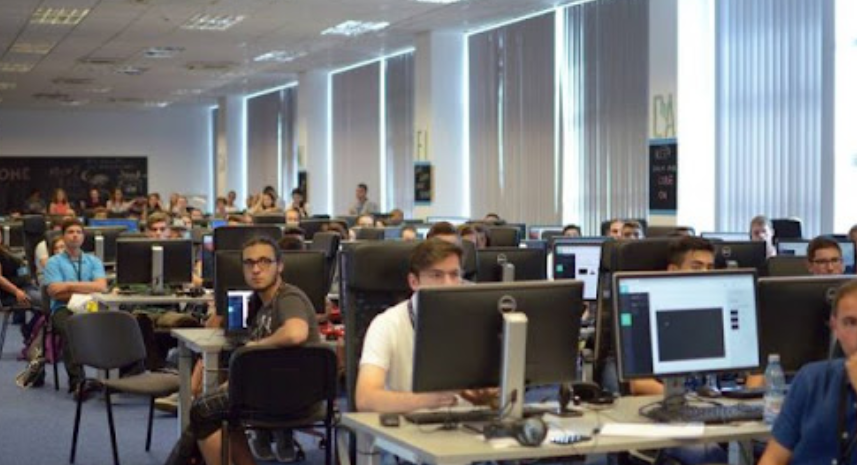
A four-year programme that combines a rigorous mathematical foundation with applied work in software systems, machine learning, and computer architecture. Year four is taken either as an Industrial Year (placed with one of our 24 partner companies) or as a Research Year inside an EEA lab.
Core areas: Algorithms & Data Structures · Operating Systems · Distributed Systems · Machine Learning · Software Engineering · Computer Networks · Information Security · Human-Computer Interaction · AI Systems Engineering.
Capacity: 60 students per cohort · Tuition: €8,500 / year (Greek & EU) · €11,800 / year (international).
Designed for a country shaped by seismic activity and a Mediterranean climate. The curriculum integrates structural analysis, geotechnics, and a dedicated final-year track in Earthquake-Resilient Design, taught in partnership with the Earthquake Planning & Protection Organisation (OASP).
Core areas: Structural Analysis · Reinforced Concrete & Steel · Geotechnical Engineering · Hydraulic Engineering · Construction Materials · Earthquake Engineering · Transportation Infrastructure · Building Information Modelling (BIM).
Capacity: 45 students per cohort · Tuition: €8,500 / €11,800.
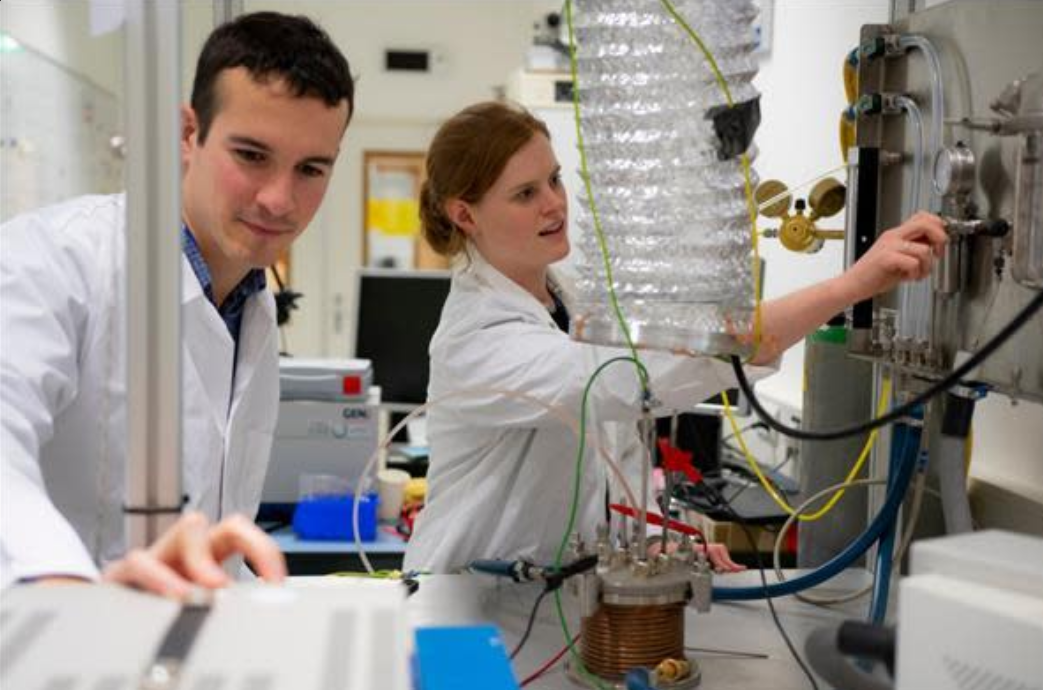
Hands-on from day one. EEA's flagship 800 m² Mechatronics Hall houses six KUKA collaborative robots, additive manufacturing equipment, a wind tunnel, and propulsion test cells. The programme follows the modern German Maschinenbau tradition adapted for industrial robotics and sustainable manufacturing.
Core areas: Mechanics of Materials · Thermodynamics & Heat Transfer · Fluid Mechanics · Control Systems · Robotics · CAD/CAM · Additive Manufacturing · Engineering Design.
Capacity: 50 students per cohort · Tuition: €8,500 / €11,800.
Greece is rebuilding its energy backbone. This programme positions graduates at the centre of the transition — from photovoltaic plant design to smart-grid operations to electrical vehicle charging infrastructure.
Core areas: Circuit Theory · Power Systems · Power Electronics · Renewable Energy Systems · Smart Grids · Control & Automation · Electric Machines · Energy Markets & Policy.
Capacity: 45 students per cohort · Tuition: €8,500 / €11,800.
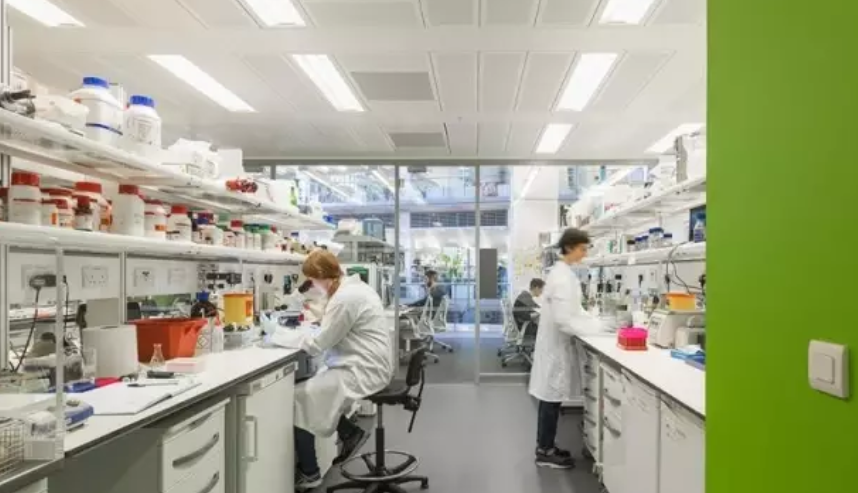
Greece's 13,676 km coastline is its greatest natural asset and its largest engineering challenge. This programme combines water and coastal engineering with marine renewables and blue-economy systems.
Core areas: Environmental Chemistry · Hydrology · Coastal Engineering · Water Treatment & Desalination · Air Quality · Marine Renewables · Climate Adaptation · Environmental Impact Assessment.
Capacity: 35 students per cohort · Tuition: €8,500 / €11,800.
A five-year integrated programme (300 ECTS) that combines a contemporary architectural design education with the conservation of Mediterranean architectural heritage. Studio courses are taught bilingually in Greek and English. Year three includes a mandatory term at a partner heritage site.
Core areas: Architectural Design · Construction & Technology · History & Theory · Structural Conservation · Urban Design · Sustainability · Digital Fabrication · Heritage Documentation.
Capacity: 30 students per cohort · Tuition: €9,200 / €12,500.
EEA offers four 90-ECTS Master's programmes, each delivered over three semesters (12 months of taught coursework plus a six-month thesis project). All Master's programmes will admit their first cohort in autumn 2027.
| Programme | Duration | Language | Tuition |
|---|---|---|---|
| M.Sc in AI Systems Engineering | 18 months | English | €11,500 |
| M.Eng in Earthquake Engineering | 18 months | English | €11,500 |
| M.Sc in Renewable Energy & Grid Integration | 18 months | English | €11,500 |
| M.Sc in Coastal & Marine Engineering | 18 months | English | €11,500 |
Each of EEA's six departments is led by a Dean who reports to the Vice-Rector for Academic Affairs. Departments are responsible for curriculum design, faculty hiring, research direction, and student academic support.
Dean: Prof. N. Mavrogiannis · 7 faculty · 50 students
Department pageDean: Prof. Y. Christoforou · 5 faculty · 35 students
Department page| Event | Dates |
|---|---|
| Winter Semester 2025/26 — Lectures | 10 Nov 2025 → 30 Jan 2026 |
| Winter Examinations | 02 Feb → 20 Feb 2026 |
| Spring Semester 2025/26 — Lectures | 02 Mar → 12 Jun 2026 |
| Spring Examinations | 15 Jun → 03 Jul 2026 |
| Summer Break | 04 Jul → 06 Sep 2026 |
| Resit Examinations | 07 Sep → 18 Sep 2026 |
| New Student Orientation 2026/27 | 21 Sep → 25 Sep 2026 |
| Winter Semester 2026/27 — Lectures | 28 Sep 2026 → 22 Jan 2027 |
| Christmas Recess | 22 Dec 2026 → 06 Jan 2027 |
| Easter Recess (Orthodox) | 03 Apr → 16 Apr 2027 |
Holidays observed: 28 Oct (Ohi Day), 17 Nov (Polytechnic Day), 25 Mar (Independence), Orthodox Easter Friday & Monday, 1 May (Labour Day), 15 Aug (Dormition).